
2013/01/02
CLOUDY BAYの響き
ニュージーランドのワインにCLOUDY BAYというワインがあるのですが、このワインの良さと言えば、CLOUDY BAYというワインの名前の響きとしか言いようがない。ワインの性質を名前だけで完全に体現している気がしてならない。もちろん味も申し分なく、またラベルが心にジッとくる。

2010/12/30
2010/12/17
"Xinjiang taps into booming red wine market" from South China Morning Post
"That could all be about the change with Chinese wine merchants keen to show the world that Xinjiang can become one of the world's premier red wine production bases.
"Xinjiang is located at roughly the same latitude as Bordeaux and California, making it an ideal place for growing grapes," said Fred Nauleau, a French winemaker hired by the Citic Guoan Wine Company, who has spent five years in the autonomous region. "And I was surprised to find that red wine I made here could inherit the fine and elegant style which once just belonged to old world, French wine." "
"Wang's idea was sparked by Xinjiang's geographical advantages and its history. An archaeological site in Niya -a key fortress on the Silk Route- discovered early last century by archaeologists from Britain, Japan and China proved that Xinjiang was once a cradle of red wine production.
Yue Feng, former director of Xinjiang's Cultural Heritage Bureau, said archaeologist found a great deal of evidence showing that the people of Niya produced and appreciated red wine as early as 300BC.
"We also found many ruins of vineyards, grape pips and even brewing equipment and alcohol containers at the Niya site," Yue said. "Some wall pictures even showed the Niya people were doing some grape wine-related business, which told us that people in the western region of China had a long wine history." "
" "I know there is an open secret that many mainland wine makers bought raw wine from France, the US, Chile, Australia and other countries to mix with their own brand wines," he said. "However, there is a rule that those countries would never provide you the best raw wine."
"Xinjiang is located at roughly the same latitude as Bordeaux and California, making it an ideal place for growing grapes," said Fred Nauleau, a French winemaker hired by the Citic Guoan Wine Company, who has spent five years in the autonomous region. "And I was surprised to find that red wine I made here could inherit the fine and elegant style which once just belonged to old world, French wine." "
"Wang's idea was sparked by Xinjiang's geographical advantages and its history. An archaeological site in Niya -a key fortress on the Silk Route- discovered early last century by archaeologists from Britain, Japan and China proved that Xinjiang was once a cradle of red wine production.
Yue Feng, former director of Xinjiang's Cultural Heritage Bureau, said archaeologist found a great deal of evidence showing that the people of Niya produced and appreciated red wine as early as 300BC.
"We also found many ruins of vineyards, grape pips and even brewing equipment and alcohol containers at the Niya site," Yue said. "Some wall pictures even showed the Niya people were doing some grape wine-related business, which told us that people in the western region of China had a long wine history." "
" "I know there is an open secret that many mainland wine makers bought raw wine from France, the US, Chile, Australia and other countries to mix with their own brand wines," he said. "However, there is a rule that those countries would never provide you the best raw wine."
2010/12/14
"Drunks beat and rob Samaritan" from South China Morning Post
"HENAN - Three drunks robbed a stranger who invited them to his home to sober up, the Henan Business Daily reports. The victim saw the men lying on a street in the provincial capital Zhengzhou. They robbed him after beating him with wine bottles. A district court fined and jailed the men on Tuesday."
2010/12/02

"Old factories home to HK's new business of storing fine wines" from South China Morning Post
"Thomas Chu's nondescript factory looks like any other in the suburbs of Hong Kong, but it will be a key driver in the city's bid to lead the world in an emerging industry - wine storage."
"Chu's facility has been transformed from a printing factory into a wine warehouse equipped with motion detectors, chiller rooms, humidity monitors and automated temperature control."


"Chu's facility has been transformed from a printing factory into a wine warehouse equipped with motion detectors, chiller rooms, humidity monitors and automated temperature control."


2010/11/17
"Moutai winery to relocate 16,000 neighbours to save water source" from South China Morning Post
"Moutai, the most famous brand of mainland liquor, plans to move more than 16,000 residents from its winery site in Huairen city's Maotai town, Guizhou province, by 2015 to a new town in the city."


"Wine frenzy grips Hong Kong" from South China Morning Post
"People like the fact that the wine is here in Hong Kong. You just go and pick it up."
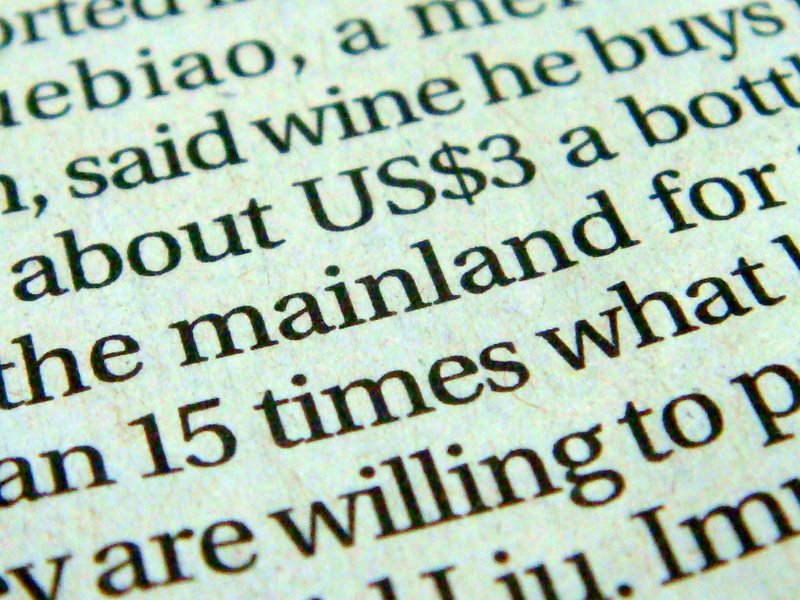
"Liu Xuebiao, a merchant from Shenzhen, said wine he buys in Hong Kong for about US3$ a bottle can be sold on the mainland for 300 yuan, more than 15 times what he paid"
"Elswood, of Christie's, said the burgeoning wealth is "inflating a bubble" in wine. "When you're paying four, five times or even more than the reference price, then you have to seriously question the market knowledge of that buyer.
At Sotheby's April auction in Hong Kong, a 12-bottle lot of Chateau Latour 1982 fetched HK$338,800 or US$43,707. About two weeks later, New York-based Tribeca Wine Merchants ran a newspaper advertisement offering the same wine for US$2,250 a bottle.
He, strolling around the Hong Kong fair with a glass of wine, said: "Westerners drink wine slowly as a way of enjoying life. Just look around you. Mainland Chinese tilt the glass and pour it straight down the throat."


"Liu Xuebiao, a merchant from Shenzhen, said wine he buys in Hong Kong for about US3$ a bottle can be sold on the mainland for 300 yuan, more than 15 times what he paid"
"Elswood, of Christie's, said the burgeoning wealth is "inflating a bubble" in wine. "When you're paying four, five times or even more than the reference price, then you have to seriously question the market knowledge of that buyer.
At Sotheby's April auction in Hong Kong, a 12-bottle lot of Chateau Latour 1982 fetched HK$338,800 or US$43,707. About two weeks later, New York-based Tribeca Wine Merchants ran a newspaper advertisement offering the same wine for US$2,250 a bottle.
He, strolling around the Hong Kong fair with a glass of wine, said: "Westerners drink wine slowly as a way of enjoying life. Just look around you. Mainland Chinese tilt the glass and pour it straight down the throat."



2010/11/15
"HK set to top league for wine auctions" from South China Morning Post
"Hong Kong is expected to overtake New York as the biggest wine auction centre by the end of this year, said Rita Lau Ng Wai-lan, secretary for commerce and economic development. Speaking on a radio programme, Laud said more than 500 wine shops had been set up in Hong Kong in the past two years and 45,000 people were now working in the industry. Since the waiving of wine import tax in 2008, Hong Kong had replaced London as he world's second largest wine auction centre, she said. New York is the global leader. A record of 110,000 people visited the four-day wine and Dine Festival last week. Government figures for the first nine months of the year showed that 34 per cent of wine exports from Hong Kong went across the border."


"Ck Life Sciences is to diversify from the development and sale of agricultural-based nutritional and pharmaceutical products into the business of owning vinewards." from South China Morning Post
"The Hong Kong-listed bio-technology company announced yesterday it had agreed to buy a majority stake in Australian-listed Challenger Wine Trust for HK$260 million."


2010/11/07
"Bottle stop."
"A visitor stands in front of a poster at the Hong Kong International Wine and Spirits Fair. A record 700 exhibitors from 30 countries and regions are taking part in the event at the Hong Kong Convention and Exhibition Centre. In the first nine months of this year, the city imported more than HK$4.67 billion worth of wine, up 72 per cent on the same period last year." from South China Morning Post


2010/09/04
香港のスペースに対する鋭い感覚

日本にあって、香港に無いものは?答えは、酒税、関税、消費税の3つで、これらが香港には実質的に無い。けれど数年前は違った。ワイン関税撤廃までの経緯は、2007年の初頭までは80%、それ以後は40%、そして2008年の2月に関税が完全に撤廃され、その効果は数年で現れた。香港はロンドンを抜いてニューヨークに次ぐワインオークション地となったのだ。
ブルームバーグの情報では2009年に香港で開催された14回のオークションの総売上額は6400万ドル(約53.9億円)。そしてこれらのオークションを開催しているのは欧米に本拠地がある競売会社達だ。ワイン関税が撤廃された2008年2月27日の15時間後にワインオークションを開いたイギリスのボンハム。共にロンドンで設立されたクリスティーズとサザビーズ。そして米のアッケル・メラル&コンディットなど。
サザビーズは2009年に香港で開催した3度のオークションで約12億円売上げ、アッケル・メラル&コンディットは1回のネットークションを含む計5回のオークションで約17.9億円を売上げた。
クリスティーズによればニューヨーク、香港、ロンドンで開かれるオークションの売上のうち、アジアのバイヤーは2005年には7%だったが、現在は61%を越えるという。
またオークションに限らずに香港はワイン業界のベストな商業地だと見なされている。 1998年から開催が始まったワインの国際的見本市のVINEXPO Asia-Pacific (ヴィネスポ アジア・パシフィック)の開催地の遍歴は、1998年に香港、2000年東京、2002年東京、2002年ニューヨーク、2004年シカゴ、2006年香港、2008年香港、そして今年も香港で開催された。2006年からは3年連続で香港で開催され、ワインの商売なら「香港」だと認識されている。そして日本のワイン生産者も香港を重視している。
ではなぜ香港がワインビジネスの拠点に他の都市より先駆けて成れたのか?。それは香港特有の街の性質にあると考える。香港は、とにかく面積が狭いところに人々が密集して生活している場所だ。そんな環境の中から、香港特有の「スペースへ対する鋭い俊敏性」が生まれたと思う。
例えば香港は、街中のビルの隙間に果物屋(ビルの壁に冷蔵庫を設置している)、あるいは散髪屋が存在する。スペースを誰よりも先に見つけさえすれば、それはチャンスとなる。香港のようなスペースが圧倒的に不足する街は、スペースがなによりも大事でその確保には他を圧倒するスピードが必要だ。つまり香港はチャンスとなるスペースを常に探し続け、見つけ次第、即座に行動に起こす人々で成り立っている。このような性質を持ち合わせている彼らが、ワイン業界の将来性の余地を見抜き、そして「ワインハブシティー」としての地位を香港のものにするために関税を無くすという大胆な方法を取って、数年でワインの一大拠点にした。
よく香港の地下鉄で少年たちが電車の扉が開いた瞬間に空席めがけて飛び込む場面にでくわすが、こんなところにもスペースへの貪欲さを感じてしまう。

登録:
投稿 (Atom)